We ship from California, United States.

Mushroom Series: Maitakes
Rhymes with Sake!!
7/21/20262 min read
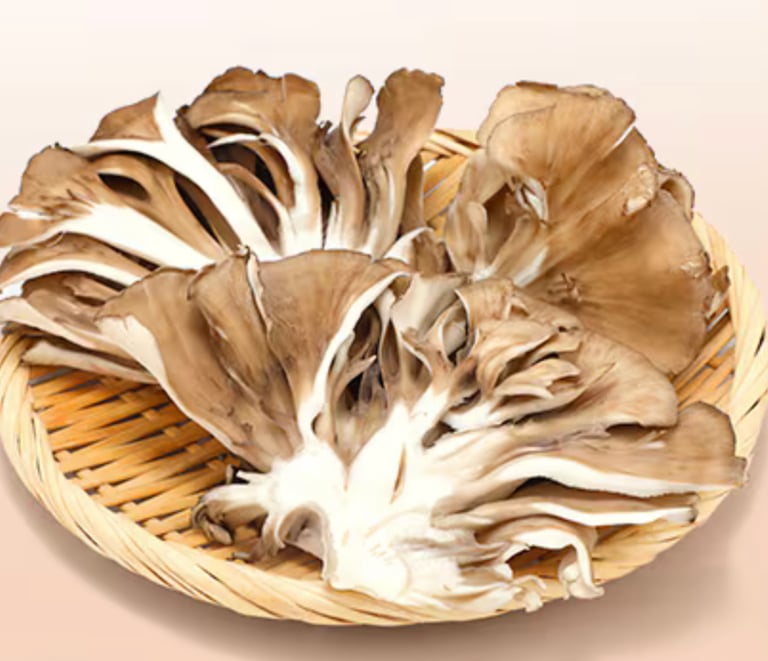
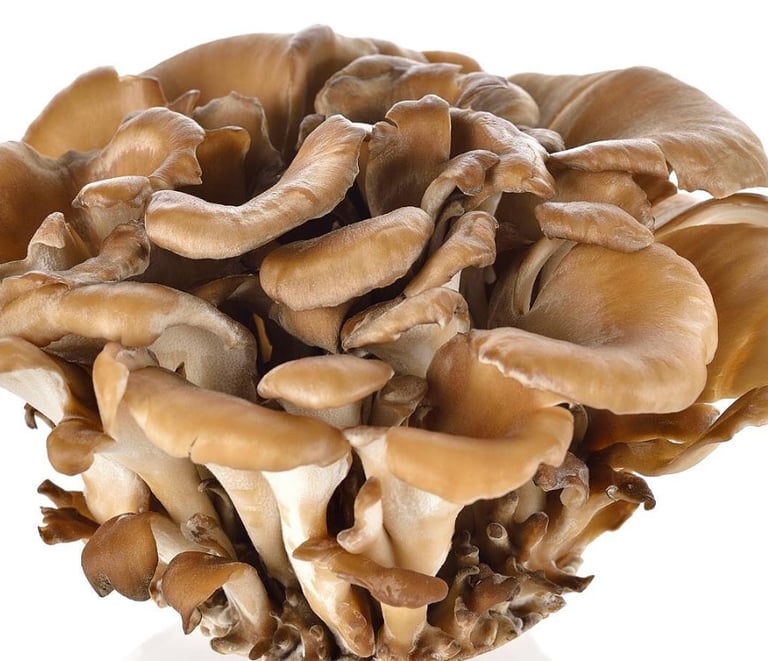
Maitake mushrooms (Grifola frondosa) are also known as Hen of the Woods. Named as Hen of the Woods because in the wild, they resemble a chickens fluffy rear end! The word "maitake" is a Japanese word that means "dancing mushroom"... not really sure how much dancing this fungus does but, apparently, the title came from people finding this "rare" mushroom and "dancing with joy" for finding it.
Maitakes are very much a culinary mushroom with an earthy, nutty flavor. They are very commonly used as meat replacements in dishes because, when cooked, they take on a meaty taste and they crisp up very nicely. They can also be dried and made into powder to use in dishes for that elevated umami flavor. Sauté these beautiful mushrooms with some butter (in my case my homemade cashew based vegan butter) with some garlic, sage, and a splash of wine. I've also had a whole "head" of these deep fried and OMGoddess, they were so good dipped into some vegan garlic aioli!
But, maitakes aren't just pretty faces in the culinary world. These funghi bring some oomph to your health as well. They help us regulate our immune systems as well as our blood sugar, they help improve lipid metabolism (the storing and burning of fat), and they've been shown as a cancer fighter because of its beta-glucan availability. If you don't know what beta-glucans are and what they do, please go read my other blog post here: https://thecauldroncreations.com/mushroom-series-chaga-mushrooms . As most edible mushrooms, Maitakes are also considered adaptogens which help us recover faster from stress, help us manage stress responses, and they support a healthy cardiovascular system (maybe not the deep fried ones but, you know). They're a good source of antioxidants, vitamin D2, potassium, and dietary fiber. So, maitakes are both culinary and adaptogenic mushrooms!!
Maitake mushroom tend to grow at the base of mature (living or dying) hardwood trees like oaks, elms, and maples in the early fall. They, like most of their group, do feed off of decay so check out any decaying roots. Look for them after a drop in temperature following heavy late summer or early fall rains. There aren't any poisonous look-alikes for this mushroom either. But, like I've said during my whole series, please find yourself a local, professional and experienced mushroom forager to learn with before you go out into the forest and get into trouble!
As for uses in witchcraft, maitake mushrooms are mostly used to manifest abundance, financial prosperity, and joyful energy (see the "dancing mushroom" meaning in the first paragraph). Also, like other mushrooms, being connected to the mycelium network gives mushrooms that significance of being a bridge between earthly and mystical realms, so think of it also for liminal work. As it's found at the base of pretty old and strong trees, you can also think of using it for grounding or resilience spellwork.
Have you ever tried maitakes or seen them growing in a forest?
Tune back in next week when we discuss Lion's Mane mushrooms.