We ship from California, United States.
Mushroom Series: Chaga Mushrooms
Ch-ch-ch-chaga!! Mushrooms!!
7/7/20263 min read
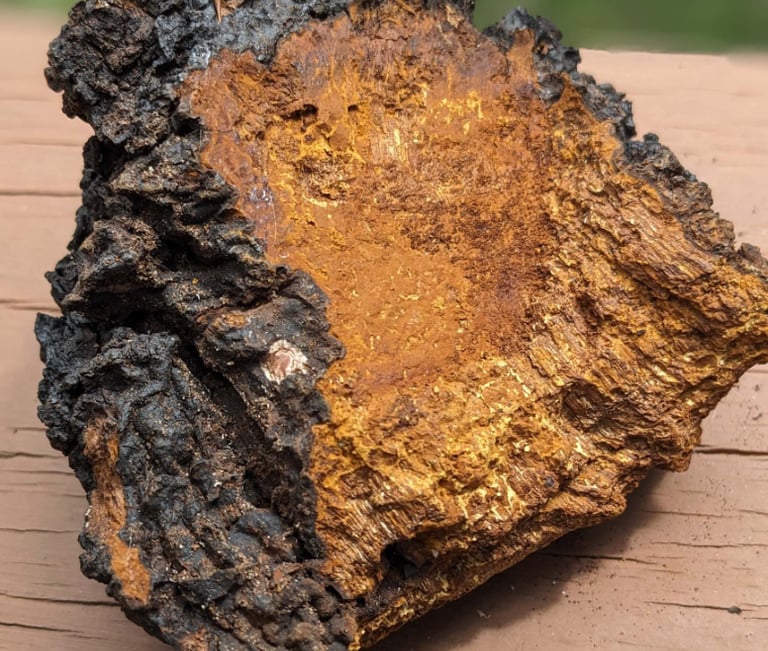
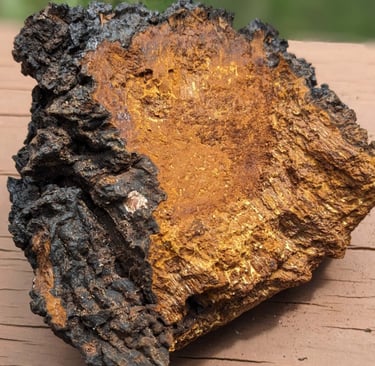
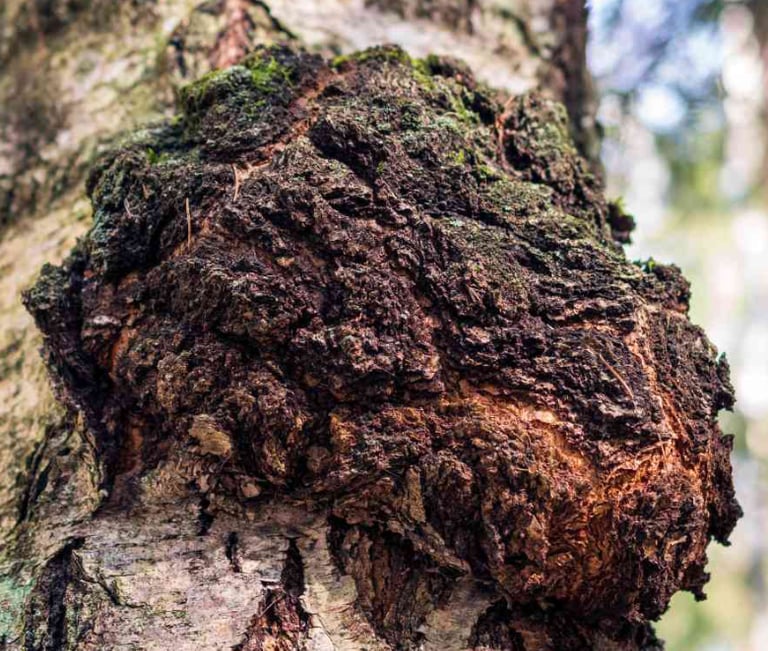
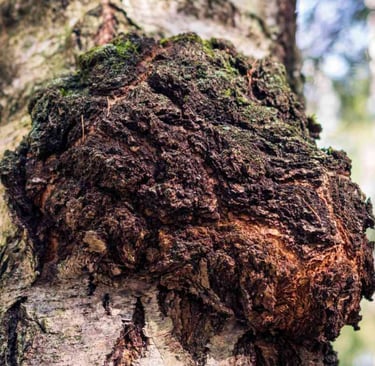
Not the prettiest of mushrooms but it's tasty and packs a great nutrient punch. The scientific name for it is Inonotus obliquus and it grows on the bark of birch trees in colder climates. Some people think it's just the bark growing weirdly but it's really a mushroom! Chaga mushrooms have a high concentration of antioxidants and beta-glucans.
Beta-glucans are a group of bioactive and soluble fibers in the cell walls of things like oats and barley, mushrooms, yeast, and algae. They are know for lowering LDL cholesterol, balancing your blood sugar, and for helping your immune system get stronger. It's not just "fiber" that helps you get healthier but it's these little bioactive babies in the fiber and it's why your cardiologist might tell you to eat your oatmeal. But, as you can see, it's not just oats that have them and, you might be surprised at this, per weight chaga mushrooms have about 8% to 15% of beta-glucans compared to whole oats at 3% to 5%! So, maybe your cardiologist should be telling you to eat more chaga mushrooms instead, right? Not really, but it certainly won't hurt to add them to your diet!
Chaga mushrooms are also anti-inflammatory because they contain some active compounds like triterpenoids and betulinc acid that can help you manage chronic inflammation, specifically inflammation that's associated with arthritis and metabolic syndrome (a group of conditions that may include high blood pressure, high blood sugar, excess body fat around the waist, and abnormal cholesterol levels). This also means that they also help regulate cytokines which may be overactively activating Mast cells and causing all kinds of inflammatory havoc in the body. There's a lot going on recently that is linking inflammation to high cholesterol as well as diabetes (well, our systems aren't disconnected islands, are they??) and other things (like migraines, IBS/IBD, etc.).
These mushrooms are really dense and fibrous which means that you will rarely eat or take them whole. Because of this, they're usually grated or broken into chunks then simmered for hours to make a nutrient-dense decoction or tea. Its flavor is earthy, slightly bitter, and often compared to coffee or cocoa (you can find chaga coffee online). You can also find chaga extracted into powders, capsules, and tinctures for easier daily use. My Cosmic Cocoa and Mushroom Coffee blends all have chaga mushroom powder added to them!
In witchcraft, we can use chaga mushrooms for grounding, endurance, and protection. It is very much tied into Earth energy as well as Saturn and can be used in ceremonies/rituals when deep-rooted strength and forest wisdom is called for. If you do Chakra workings, it's associated with the root chakra. Shamans in Siberia and Russia traditionally used chaga in their healing ritualistic baths and healing spellwork, calling it the "Mushroom of Immortality".
Chaga is definitely not a culinary mushroom but an adaptogenic mushroom. If you want to add some chaga into your daily routine, please make sure you check with your doctor first. I recommend starting with a powder to add to your food. As I said above, you can also find capsules and tinctures that you can use as a daily supplement. Or get some dried chaga and make a tea with small chunks. Honestly, I'm going to invite you to try what I use almost daily - chaga truffle salt. I get mine here: https://thechagaco.com You'll also find many things with chaga at that store, including chocolates!!
So, how will you add some cha-cha-chaga, into your diet?