We ship from California, United States.

The Witch’s Herbal First Aid Kit: The Plants I Reach for When Things Go Wrong
Simple plant allies for cuts, bites, burns, and everyday herbal care.
3/6/20263 min read

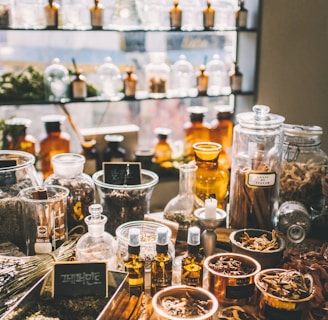
Building a Witch’s Herbal First Aid Kit
One of the most empowering things you can do as an herbalist—or a witch who works with plants—is to build your own herbal first aid kit. Nature provides an incredible pharmacy, and having a few trusted herbs on hand can help you handle many of the small bumps, scrapes, bites, and everyday ailments that come our way.
A witch’s herbal first aid kit doesn’t need to be complicated. In fact, it’s best to start small with a handful of plants that are versatile and reliable.
Here are a few herbal allies that deserve a place in nearly every herbal kit.
Yarrow (Achillea millefolium)
Yarrow is one of the classic first aid plants and has been used for centuries to help stop bleeding and support wound healing. Fresh leaves can be gently crushed and applied to small cuts to help slow bleeding. Yarrow is also wonderful as a wash or infused oil for minor wounds.
Energetically, yarrow is often considered a protective plant—both physically and spiritually—which makes it a beautiful addition to a witch’s medicine cabinet.
Plantain (Plantago spp.)
Often dismissed as a common “weed,” plantain is one of the best herbs for insect bites, stings, splinters, and irritated skin. The fresh leaf can be chewed or crushed into a quick poultice and applied directly to the skin to help soothe inflammation and draw out irritants.
It’s one of those plants that grows almost everywhere and proves that powerful medicine often grows right under our feet. Look for it growing near trails.
Calendula (Calendula officinalis)
Calendula is one of the most beloved skin-healing herbs in herbalism. It supports tissue repair and is commonly used in oils, salves, and washes for cuts, scrapes, burns, and irritated skin.
Its bright golden flowers also carry strong solar energy, making calendula a lovely herb for both healing and uplifting the spirit.
Chamomile (Matricaria chamomilla)
Chamomile is well known as a calming tea, but it also has a place in first aid. It can help soothe inflammation, irritated skin, digestive upset, and tension.
A strong infusion can be used as a compress for irritated eyes or skin, while a cup of tea can help settle nerves after a stressful moment.
What Might Go Into Your Kit
Every herbalist’s kit will look a little different, but some useful preparations might include:
Dried herbs for teas and washes
Herbal salves for cuts and skin irritation
Infused oils for healing and massage
Tinctures for quick internal support
Gauze, bandages, and clean cloths for poultices and compresses
Over time, your kit will grow as you learn which herbs you reach for again and again, which herbs call to you, etc.
A Living Practice
An herbal first aid kit is more than just supplies on a shelf—it’s a relationship with the plants that care for us. Learning their properties, growing them in the garden, or foraging them respectfully deepens that connection.
For witches, there is also magic in the act of preparing our medicines. Each salve stirred, each herb dried, each tea brewed becomes part of a long tradition of plant wisdom and healing.
Coming Soon to the Shop
Because I reach for these kinds of herbal remedies so often in my own home, I’ve been working on putting together a natural herbal first aid kit that will soon be available in the shop. My goal is to create something simple, practical, and rooted in traditional herbal wisdom—something you can keep in your home, car, or travel bag for those everyday moments when plant medicine can lend a hand.
I’ll be sharing more details as the kits come together, but the intention is to make it easier for others to begin building a relationship with herbal first aid and natural remedies.

