We ship from California, United States.
The Idiocy of Reducing Plants to Bullet Points
To trust or not to trust those herbal health advisories...
12/22/20254 min read


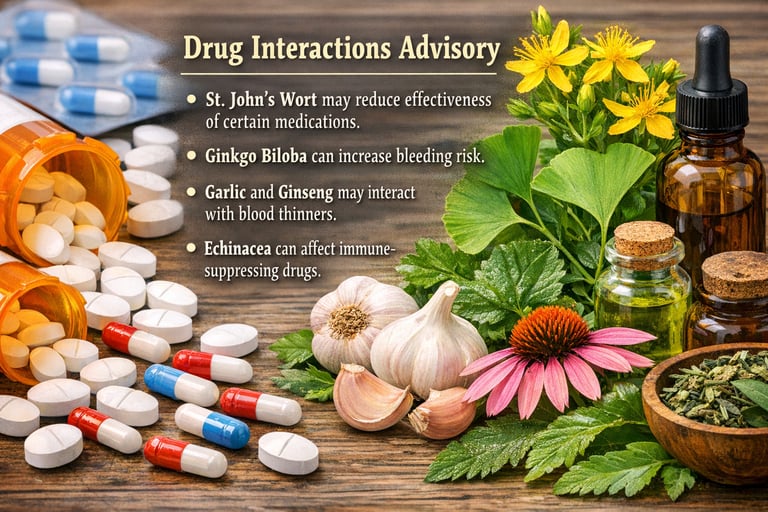
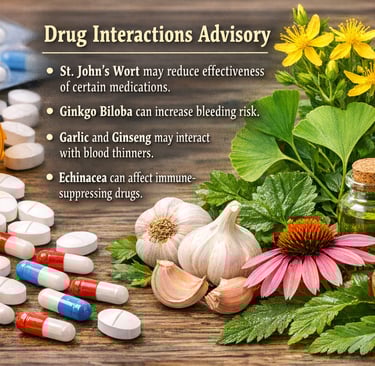
Let's talk about something that has been rolling around in my brain for a bit in regards to the health advisories of herbs. This will be a longer blog post than my usual so get comfy. Even though I publish on each of my products on my website that you should check for interactions with your medications or with any health conditions, there's a lot of misleading information on the internet. So, I decided to dedicate this blog to talking about some of these instead of this week's "Herb of the Week" post.
A lot of us have seen the advisories against taking some herbs internally but do you know that most of these advisories are only due to the active ingredient in these herbs? Most testing is done with isolating the active ingredient and feeding it to test subjects (usually mice) and then monitoring for side effects. Why? Because most of these lab tests are conducted by pharmaceutical companies, or contracted by them, so they can recreate the active ingredient in their own products and be able to patent them to sell at exorbitant prices (there's no legal way to patent nature). Those who understand plant energies know that, yes, the active ingredient is important but the supportive energies/constituents of the rest of the plant are just as important (and sometimes even more important). Why are they important? Because they either help the body absorb the active ingredient, or they buffer the body from side effects of the active ingredient. Isolating just one constituent and multiplying it to be even more potent without any of the other parts of the plant will, most assuredly, cause problems. But, you know what? Why should pharmaceutical companies care about that? They have another medicine to combat the side effects of that first medicine. And so on, and so on…
Aspirin. Did you know that aspirin is derived from willow bark? Yep. People used to chew on willow bark to relieve headaches, body aches, etc. And you know what? It didn't upset their stomachs. Why? Because the willow bark not only has salicin (the precursor to salicylic acid - what is now known as aspirin), it has a complete group of salicylic glycosides that include salicin, salicortin, tremulacin, picein, and populin. It also has flavonoids that provide antioxidant properties and tannins plus essential oils and minerals. So the pharmaceutical company comes along and says, "hey, this is great at reducing pain" and they isolate salicin as the active ingredient and leave everything else behind. But, ask a doctor if you can take willow bark instead of OTC aspirin and they will give you a blank look because they have no idea where aspirin actually came from. Willow bark doesn't, in my experience, carry the same side effects as OTC aspirin (including irritating the stomach). But, you know, test it out yourselves.
Anesthesia. Did you also know that your lidocaine and novocaine was taken from the natives in Central America in the 1800s? Guess what its active ingredient is extracted from? Coca leaves, also known as cocaine. Modern anesthesia for surgery was also derived from natives in Central America but good luck finding all of that information easily. It's there but it's buried under "look what we made". Again, those early renditions of anesthesia had little to no side effects, unlike much of our modern day anesthesia. Not saying you should go without it, but it's just another example of pharmaceutical companies thinking they know best and taking only what they can patent (make money from) and tossing out the rest.
But, what's the solution? Many people take a lot of prescription medicines (also, ask your doctor when they prescribe your new medication how long they studied pharmaceuticals in medical school - you might be surprised at the answer) and they don't want to get a weird interaction. Check the interactions but consider the source, right? Try just a little of an herb before diving in to drinking a tea of that herb multiple times a day. In herbalism, we're taught to try simples (teas made with just one herb) so that we get to know the flavor, the effects, the complexity of an herb. New to an herb? Try a simple!
I'm not saying that there aren't side effects of herbs but I can tell you that I've taken meds to help me sleep (years ago) and they made me feel crappy the next day. In my gut, I knew that it wasn't good for me because I would get super anxious before taking it. Now, drinking an herbal tea or doing a tincture with whole plants? No problem. And, I've had a few customers come back to me after trying my sleep teas and tinctures with how it helped them sleep deeper and longer but with no nasty effects the next day.
Herbal plants are our allies, our partners. You wouldn't ask a friend to only bring one aspect of their personality to your party, would you? Why should it be any different with our herbal friends. I hope I've entertained and enlightened you today!
Merry Witchmas and Blessed Yule to all! Go hug a plant!