We ship from California, United States.

Our New Blog Series on Mushrooms
Just wanted to write a little intro about our new series and mushrooms in general.
6/30/20262 min read
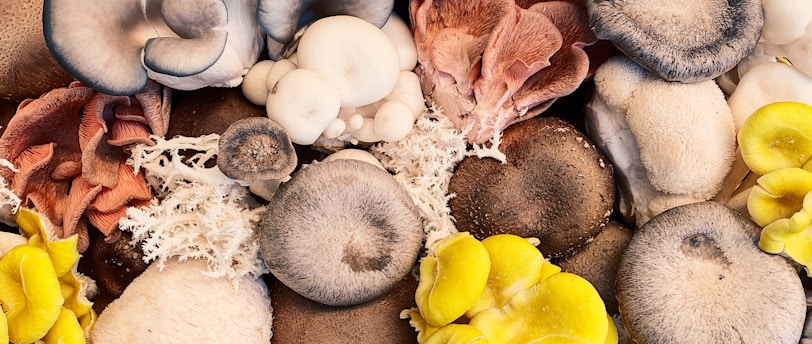

Mushrooms. You either love them or you hate them. I never understood the hate but it's good that we don't all like the same things. Honestly, these babies bring a lot of nutrition and antioxidants plus a lot of them are considered adaptogens (something that helps your body recover better from stress) than any other species in the world. And, yes, mushrooms have their own kingdom - they are not plants and they are not animals, they are in the fungi biological kingdom. Let's learn a few general things about them before the series actually begins.
Did you know that mushrooms are classified into three categories, with some mushrooms crossing over multiple categories? What are the categories you ask? Well, the categories are:
Edible/Culinary Mushrooms
Functional Mushrooms
Adaptogenic Mushrooms
Edible or culinary mushrooms are pretty much your everyday grocery store mushrooms—like button, cremini, portobello, shiitake, and oyster. This doesn't mean that they're insignificant in help you stay healthy but it just means that these are usually used more for flavor, texture, and basic nutrition. They tend to be good sources of fiber, vitamins (like Vitamin D and B-vitamins), and minerals.
Functional mushrooms are usually denoted as such because of their health benefits that go beyond the basic nutrition of edible/culinary mushrooms. They're known for high concentrations of bioactive compounds like beta-glucans and antioxidants (Beta-glucans support heart and digestive health, balance blood sugar, and modulate the immune system). These tend to be very woody or leathery so are rarely used in cooked foods and are used mostly as powders or liquid extracts.
Adaptogenic mushrooms are like a sub-category of functional mushrooms because they still have a higher nutritional level than culinary mushrooms but they also serve the role of an adaptogen through some active compounds in their make-up. These compounds help the body adapt to physical, emotional, and environmental stress, regulate the nervous system, and manage cortisol levels. Different ones provide different levels of these benefits (we'll learn more by breaking down the most common mushrooms in the coming weeks).
Now, we are not going to talk about the trippy kind of mushrooms (and there are different species of that as well) so I hope you're not too disappointed but we will be talking about the many benefits of the following mushrooms:
Chaga
Turkey Tail
Maitake
Lion's Mane
Shitake
Oyster
Reishi
Cordyceps
Morel
Porcini
Truffle
I hope you'll enjoy this journey into the world of fungi! See you next week for Chaga mushrooms, the ugly duckling of the mushroom world!
WARNING: Please NEVER eat raw mushrooms and, if you want to start foraging for mushrooms, please go with an experienced guide in your area. Don't eat a mushroom that you don't know what it is 100% with your entire being! Also, don't touch random mushrooms as some can be poisonous out in the wild. Be safe.