We ship from California, United States.
Mushroom Series: Turkey Tail
Let's "gobble" up the info on Turkey Tail mushrooms!
7/14/20264 min read
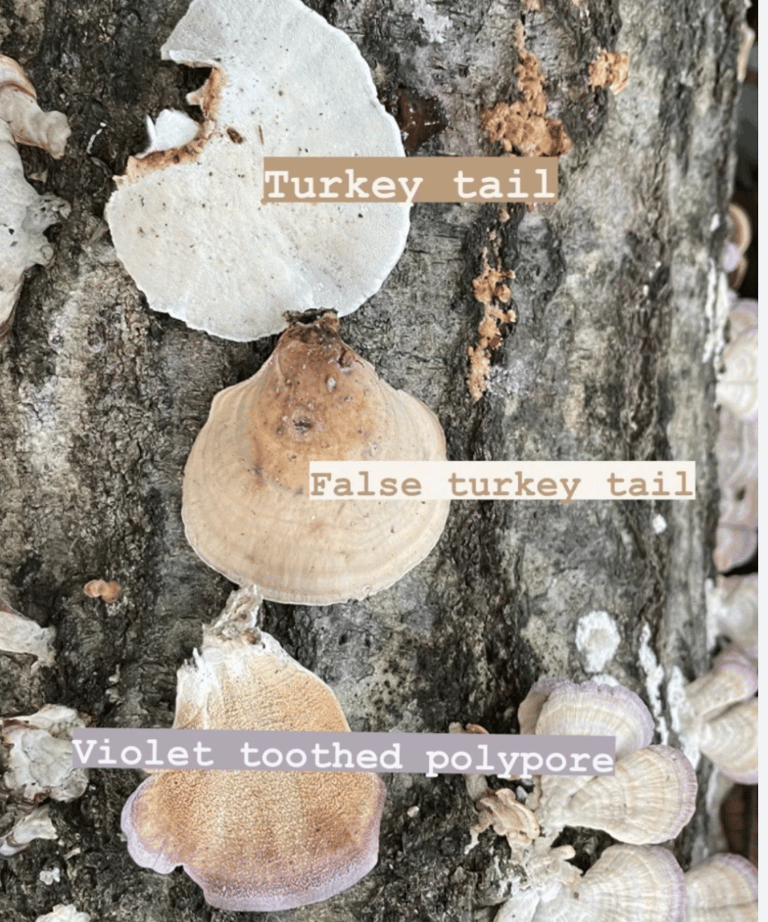
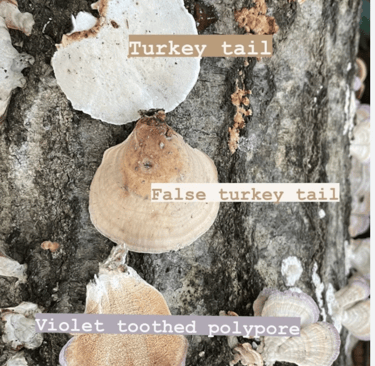
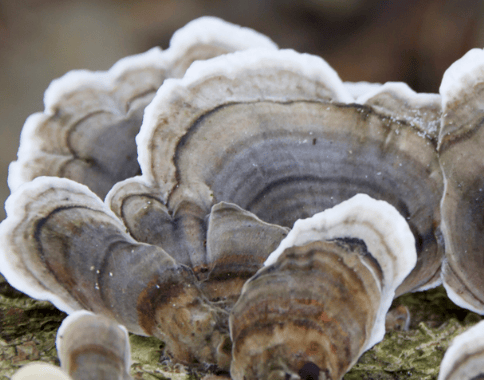
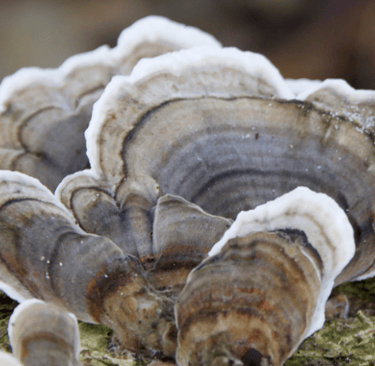
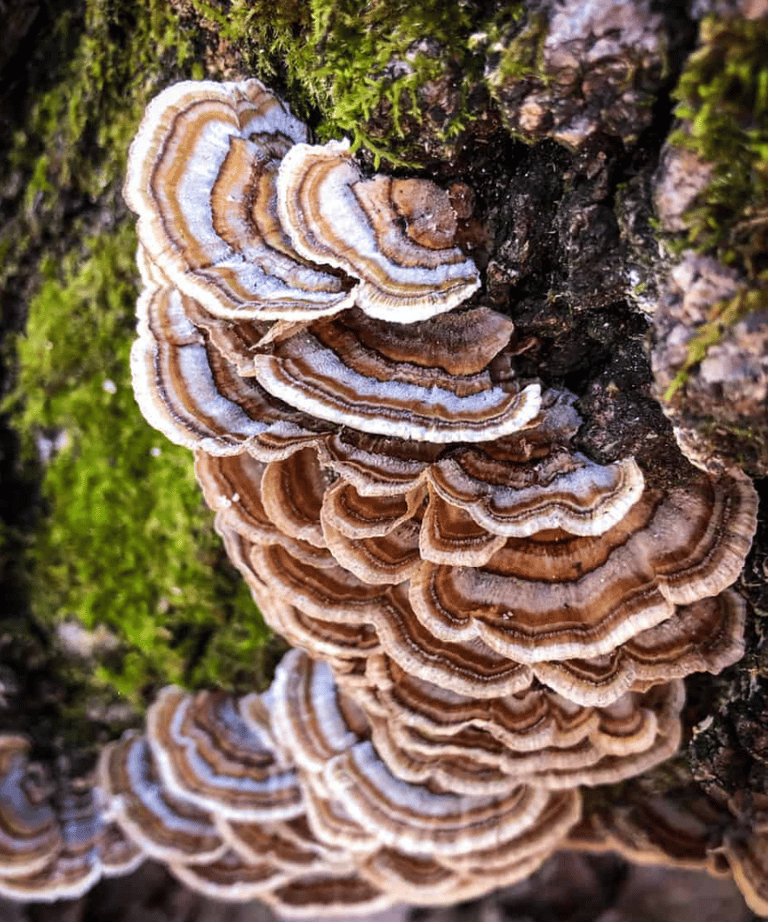
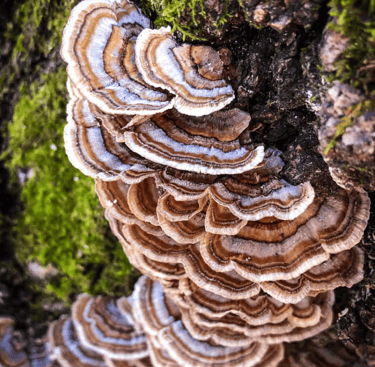
Look at those pictures and you can get a pretty good idea as to why these mushrooms are called "Turkey Tail" mushrooms! Turkey Tail mushrooms (Trametes versicolor) are very commonly found in wooded areas because they LOVE breaking down lignin and cellulose in rotting wood and do their little "transmutation" of it into vital nutrients the soil needs to grow healthier plants, etc. These beauties are found all over the world in temperate locations across North America, Europe, and Asia. I've found them in my backyard growing on a fallen branch! These are not necessarily culinary mushrooms because they are rather leathery but they are definitely functional mushrooms as well as adaptogenic mushrooms.
But, there is a fake Turkey Tail mushroom, a doppelgänger! It's commonly called "False Turkey Tail" but its scientific name is "Stereum ostrea". But, you can tell the difference by checking their underbellies! The poser has a completely smooth and yellow-ish, poreless underside while our hero has a white, porous one. (Check the photo with how to tell the difference.) Don't worry about the false one too much though as it's not poisonous and it does still carry some health benefits such as being antibacterial and antifungal (does anyone else find it funny that a mushroom has antifungal properties??).
Now back to our regular programming!
Turkey Tail mushrooms are considered pretty powerful powerhouses for immune system support because they contain specialized beta-glucans and polysaccharopeptides like Polysaccharide-K (PSK) and PSP which "hand feeds" the immune system's natural killer cells (NK cells). NK cells are the immune system's hunter cells that go out to find invaders and kill them! You think that's violent? You should see NK cells in action! If you're interested in seeing how these baddies work, check out this video on YouTube: https://www.youtube.com/watch?v=iFA21xae5rI. NK cells are very important in our bodies' efforts at fighting viruses, bacteria, and cancer. Because of their role in cancer fighting and how Turkey Tail mushrooms help them be strong and healthy, countries like Japan and China use these mushrooms as an added therapy for people being treated for cancer with a reduction in side effects and with an improvement in their survival rates.
These mushrooms don't just help fight off invaders in our bodies, they also are helpful to the digestive system by being rich in fiber and prebiotic compounds to help feed good bacteria in the gut and promote a healthy gut balance. They're also packed with phenols and flavanoids (antioxidants and anti-inflammatories) to reduce oxidative stress in our bodies as well as lower overall inflammation.
So, how should we use Turkey Tail mushrooms? They are typically dried then ground into powder (sometimes with their mycelium for added benefits) and that powder can be put into supplements or you can use it as "seasonings" on your food. You can also use dried Turkey Tail mushrooms as a tea or tincture. A lot of times you will find them as part of a immunity boosting blend like "My Community" on Paul Stamet's website (if you don't know him, look him up on YouTube or get one of his books - he knows EVERYTHING about mushrooms and is quite the lecturer!): https://hostdefense.com . These mushrooms have a mild earthy and nutty flavor but, when prepared as a tea, are slightly bitter.
As for side effects, Turkey Tail is generally well-tolerated except, because of their fiber content, you might have some mild side effects of gas, bloating, or darkened stools. There's also a side effect of temporary fingernail discoloration due to its content of Polysaccharide K (PSK), but it's not a big deal and will go away, plus it's pretty rare. Like with anything you're trying to add to your routine if you already take prescription meds or other over-the-counter supplements, check with your pharmacist about adding Turkey Tail supplements or teas (yes, pharmacist because they know more about chemistry of medications than your doctor). Also, if you're planning on foraging for these (or any mushrooms) please go with a guide to learn how to identify the appropriate ones in the wild first. As for Turkey Tail mushrooms, avoid harvesting wild samples near contaminated soils and always practice harvesting ethically and sustainably.
Witchcraft uses of Turkey Tail mushrooms? I'm sure this is a burning question! Not surprising, they are associated with earth and spirit elements. Because of their "rings", many associate Turkey Tail mushrooms as being symbolic of the cycles of life, death, and rebirth so it's not a huge jump to thing of using these mushrooms when setting intentions for transformation. As I mentioned earlier, you can also use these while doing any sort of transmutation ritual because of how they take death and transmute it into life-giving nutrients. Look to use these mushrooms in rituals involving the need for resilience or boundaries, or rituals for longevity, transitions, and ancestral connections. These are beautiful to use in a tea when working on shadow work.
Next week, we'll talk about Maitake mushrooms! See you then!