We ship from California, United States.

Herb of the Week: Figwort
This ally is also called "knotted figwort".
3/24/20262 min read
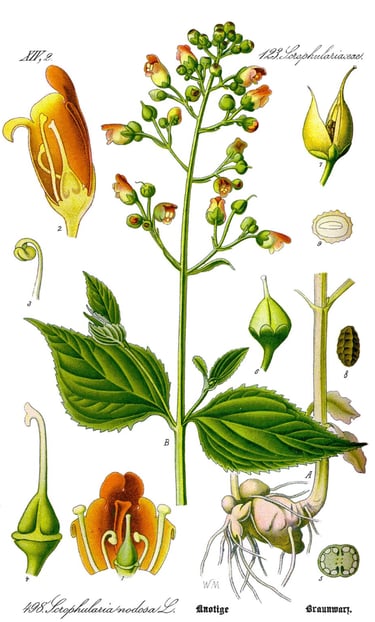
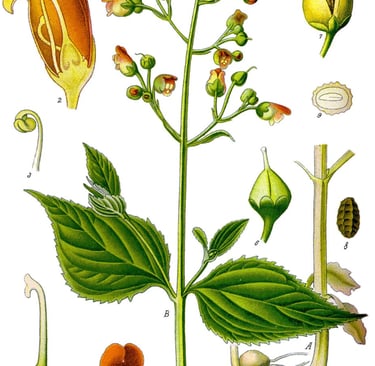
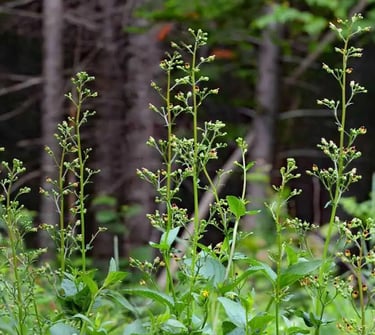
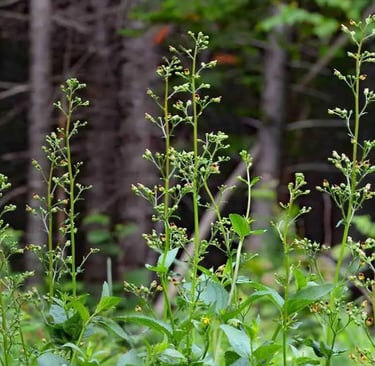
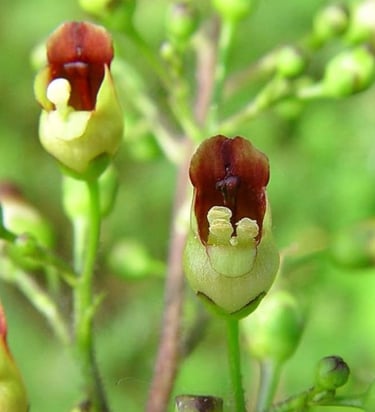
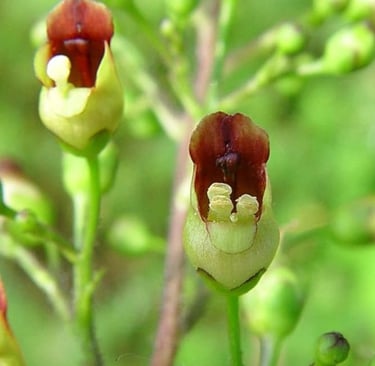
This week's herb is one called Figwort (scrophularia nodosa) and it's sometimes called Knotted Figwort or Woodland Figwort. If you look at the photos above, you can see that its flower does resemble a fig, right? So, what is Figwort and what does it do? Well, read on!
Figwort is a potent traditional medicinal and can be toxic (nausea, vomiting, dizziness) in high doses but, used expertly, it is an amazing ally for the lymphatic system, the skin, and as a detoxing herb. It's considered a strong anti-inflammatory and a mild diuretic. It's been used for a long time as a way to help ease gout, rheumatism, and arthritis because it contains an ingredient called "iridoid glycosides" that makes it an effective pain treatment for those conditions. For the skin, it's also been called the "skin herb" as it's very helpful in treating eczema, psoriasis, rashes, acne, boils, and bruises due to its ability to decrease inflammation and promote healing, taken both internally and topically. For the lymphatic system, it's used to reduce swelling of lymph nodes and promotes detoxification of impurities that sometimes get stuck in those nodes. (Note: I'll be writing a blog post soon about the lymphatic system because I don't think enough people understand or know much about it.) Medicinally, this herb isn't flashy but it works slowly, deeply, and persistently.
Have you ever heard of the Doctrine of Signatures? This states that things that look like body parts or organs are perfect to bring a healthy balance to those when they need support. The most common example is walnuts which look like brains and are actually healthy for the brain. Historically, Figwort's scientific name is linked to its traditional use in treating scrofula, a form of tuberculosis causing swollen neck lymph nodes based on this doctrine and now we know that it does, indeed, help the lymphatic system.
Use it in a tincture or infusion (but beware that it is a very bitter herb) or as salves or washes for the skin. Like most herbs, this is best used over time than as a quick fix. What other herbs can you blend with Figwort? Try a blend with all or a couple of these: cleavers, burdock root, calendula, nettles.
Now, what does it do for your witchcraft practice? Since this is a very powerful healing ally, one can use it in protection and healing rituals. Traditionally, it was used as a protective measure against witchcraft! There are folkloric uses of people hanging this around the necks of cows to protect them from sickness and evil. So, use this as protection from the "evil eye" in your practice.
Let me know if you're interested in also learning more about the Doctrine of Signatures! Have you ever heard of this herb before now? Does the "toxic in large doses" scare you away from trying this herb? Let me know in the comments.